![DentalMarketing-Logo2-White copy-1.png]](https://grow.dentalmarketing.com/hs-fs/hubfs/DentalMarketing-Logo2-White%20copy-1.png?height=40&name=DentalMarketing-Logo2-White%20copy-1.png)
Overview
- Mobile Responsiveness
- Clear Navigation
- Appointment Booking
- High-Quality Imagery
- Patient Testimonials
- Social Proof Integration
- Contact Information
- Compliance and Credentials
- Accessibility
- On-Page SEO
Resources
Mobile Responsiveness
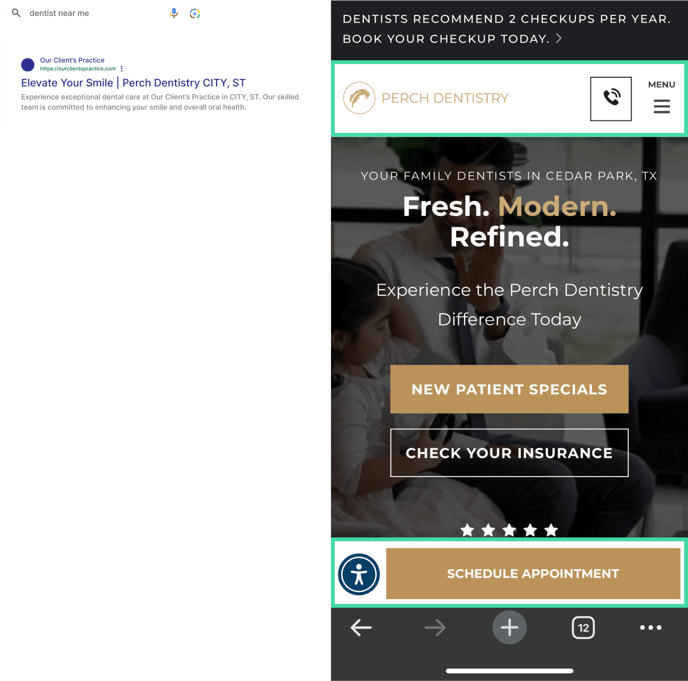
We ensure that the client's website is fully optimized for mobile devices, providing a seamless browsing experience for all users.
Example: Sticky header, Fixed CTA in Footer (hides when scrolling down to provide more screen real estate).
SEO Benefit:
Google now primarily uses the mobile version of a website's content for indexing and ranking. This means that having a mobile-responsive website is crucial for ensuring that the content is properly crawled and ranked by search engines.
Local SEO Benefit:
Mobile searches often have local intent, such as finding nearby businesses or services. A mobile-responsive website can help capture local search traffic, especially for users on the go who are looking for immediate solutions or information. This can improve the visibility in local search results and enhance the local SEO efforts.
Clear Navigation
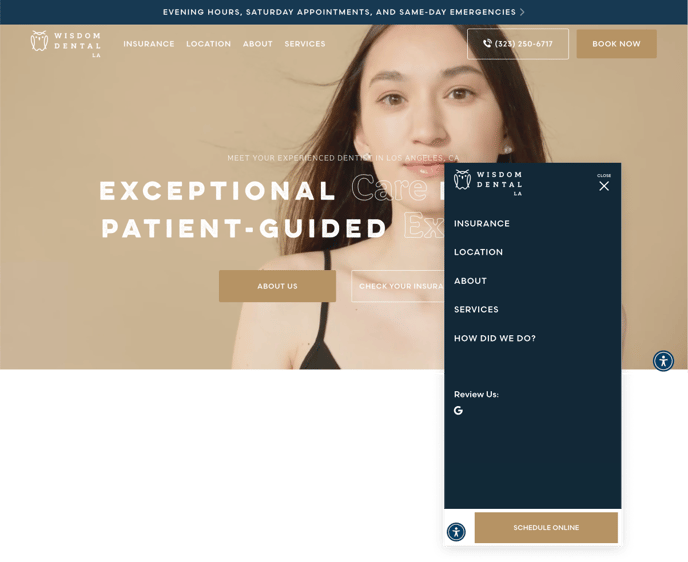
Our websites feature intuitive navigation menus, making it effortless for visitors to find the information they need about the practice and services. Based on years of search data, we found that the top visited pages on a dental website are:
- Insurance & Financing
- About Us
- Services
- Location & Hours.
By highlighting these links and having them available on every page, we are able to curate the patient’s journey and optimize conversions.
SEO Benefit:
The longer that a user is on the website or web page, the better the SEO value. Studies have shown that minimal navigation allows the user to navigate easier through the site, find the answers to their questions faster, and not become overwhelmed with the amount of options to choose from. We show the user what they want to find, rather than making them find it on their own.
Appointment Booking
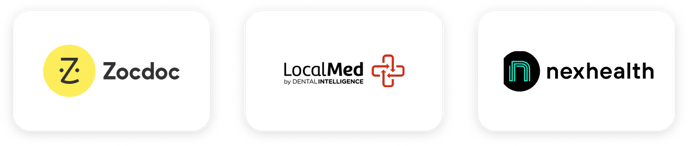
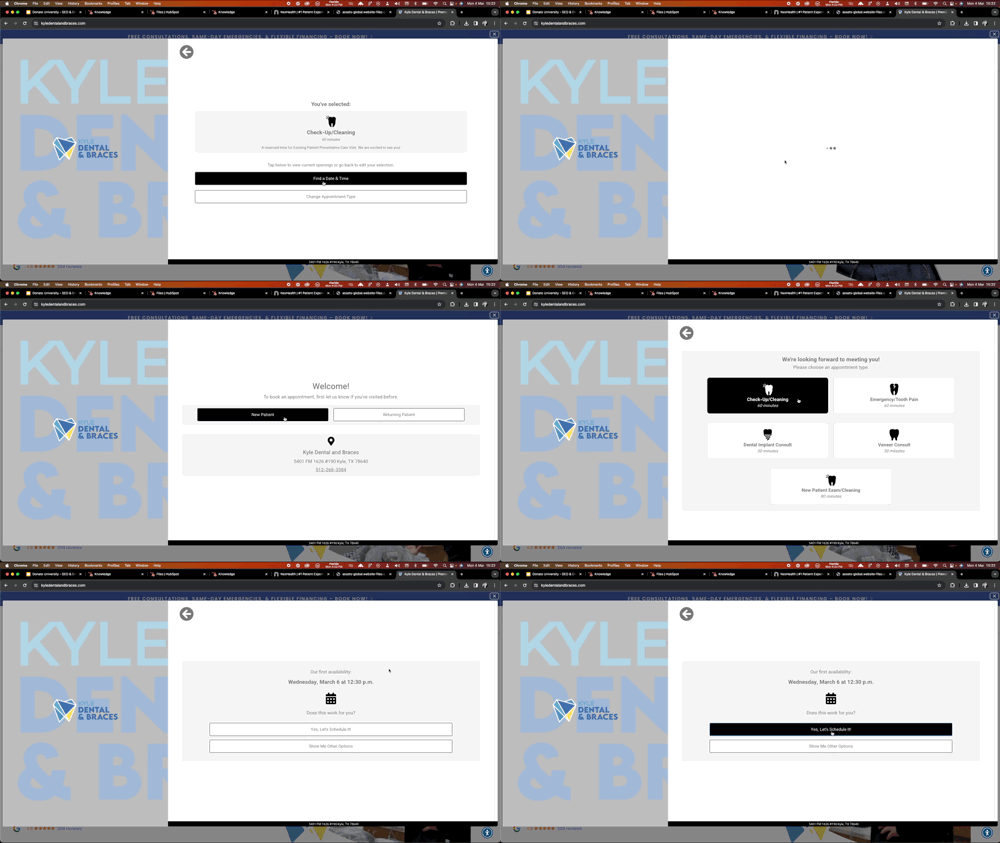
We integrate online appointment scheduling functionality, allowing patients to easily book appointments directly through the website.
Local SEO Benefit:
For dental practices targeting local customers, having an appointment booking system on their website can improve your local SEO performance. Search engines like Google often prioritize local businesses in search results, especially when users include location-specific keywords in their queries. By offering online booking, we make it clear to search engines that the practice is actively serving the local community.
UX Experience Benefit:
Providing an appointment booking option directly on the website enhances the user experience. Visitors can easily schedule appointments without having to navigate to a separate platform or make a phone call. A positive user experience can lead to longer on-site engagement and higher conversion rates, both of which are factors that search engines consider when ranking websites.
High-Quality Imagery
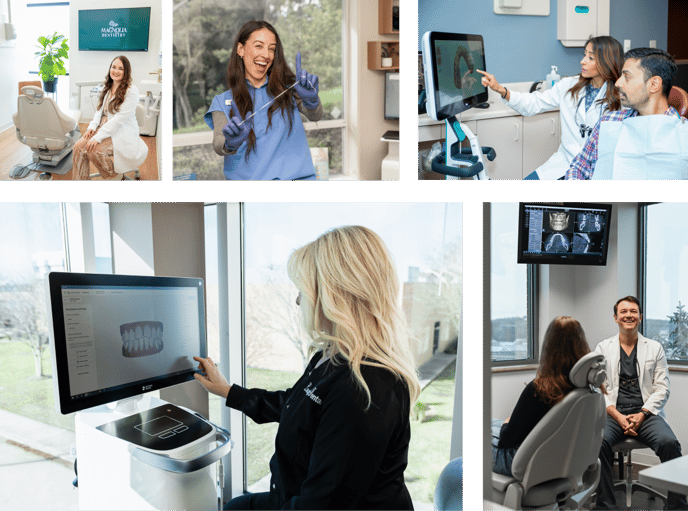
We use professional photography to showcase the dental practice, staff, and facilities, enhancing the visual appeal, authenticity, and credibility of the website. It is important to highlight our strategy is a results-focused approach.
SEO Benefit:
Original photos can also benefit SEO efforts. Search engines like Google prioritize original and high-quality content, including images, when ranking websites. By using unique practice photos, the website may receive better visibility in search results.
In cases that we do use Stock Photos:
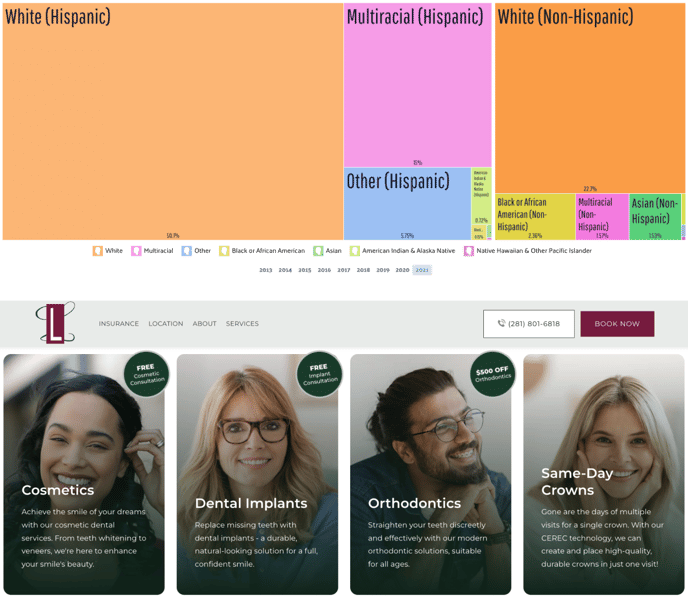
We ensure using demographic-appropriate images to indirectly benefit the SEO efforts of the dental practice's online presence:
- User Engagement: When the website visitors, who are potential patients, find relevant and relatable images, they are more likely to engage with your content. Increased engagement metrics such as time spent on page, lower bounce rates, and higher click-through rates can positively impact the website's SEO rankings.
- Lower Bounce Rates: If users find images that resonate with them, they're more likely to stay on your site longer, reducing bounce rates. Lower bounce rates signal to search engines that the website provides valuable and relevant content, which can improve your site's overall ranking.
- Social Sharing: Engaging images that reflect your target demographic may be more likely to be shared on social media platforms. Social signals, such as likes, shares, and comments, can indirectly influence SEO by increasing brand visibility, driving traffic to the website, and potentially earning backlinks.
- Local SEO: If your dental practice serves a specific geographic area, using images that reflect the local demographics can be particularly beneficial for local SEO efforts. Google's algorithms take into account factors such as local relevance and user engagement when determining local search rankings.
Patient Testimonials
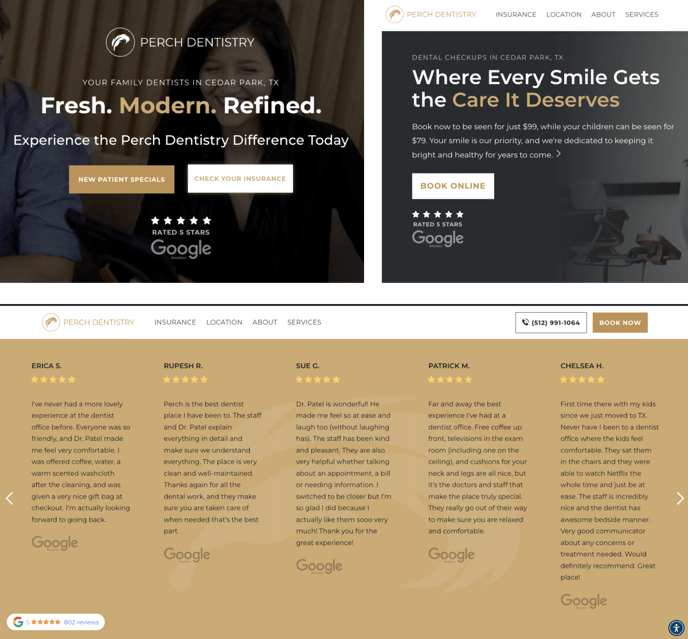
We prominently display positive reviews and testimonials from satisfied patients, helping to build trust and credibility for the dental practice.
SEO Benefit:
Positive testimonials serve as social proof, demonstrating to potential patients that others have had positive experiences with the dental practice. This increases the credibility and trustworthiness of the practice in the eyes of both users and search engines.
Patient testimonials often contain keywords and phrases related to dental services, procedures, and the overall patient experience. When these testimonials are displayed on the website, they can contribute to keyword optimization efforts, helping the website rank better for relevant search queries.
Social Proof Integration
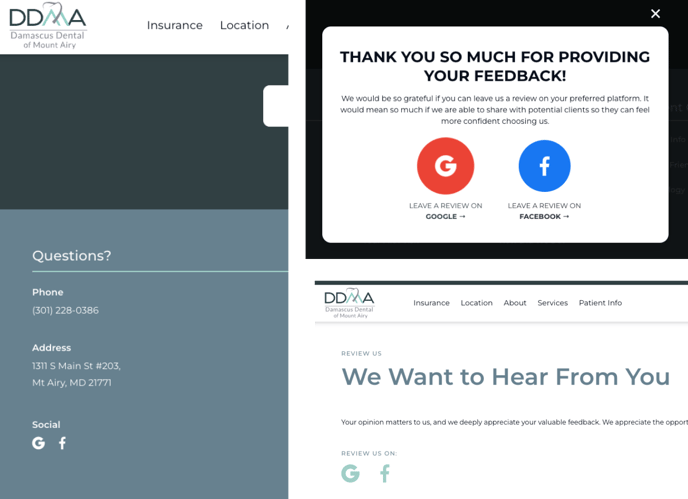
We integrate social media links and buttons, encouraging visitors to connect with the practice on platforms like Facebook, Instagram, and Google.
SEO Benefit:
Social media profiles provide additional opportunities for backlinks to the dental practice website. When users share or engage with content from the website on social media, it can generate backlinks to the website, which are valuable for SEO. Additionally, social profiles themselves often have high domain authority, and having a link from them can contribute to the website's overall backlink profile.
Contact Information
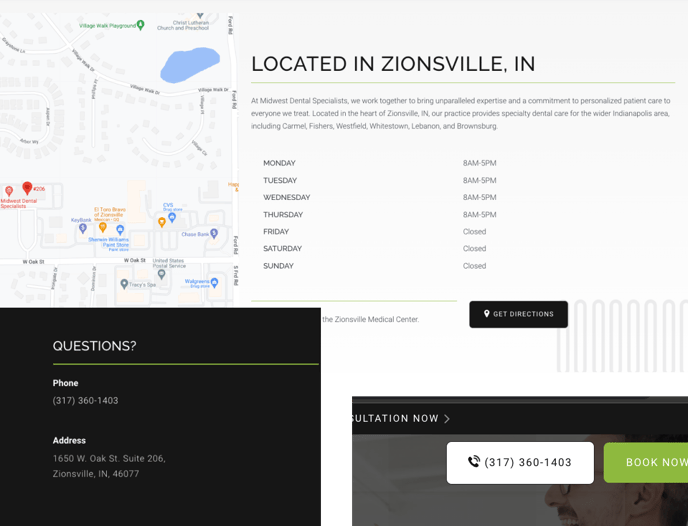
We prominently display the dental practice's contact information on every page, making it easy for visitors to reach out via phone, email, or contact form.
SEO Benefit:
Search engine bots crawl websites to index content and understand their relevance to user queries. By displaying contact information prominently on every page, we make it easier for search engine bots to recognize key information about the practice, potentially leading to improved rankings.
Compliance and Credentials
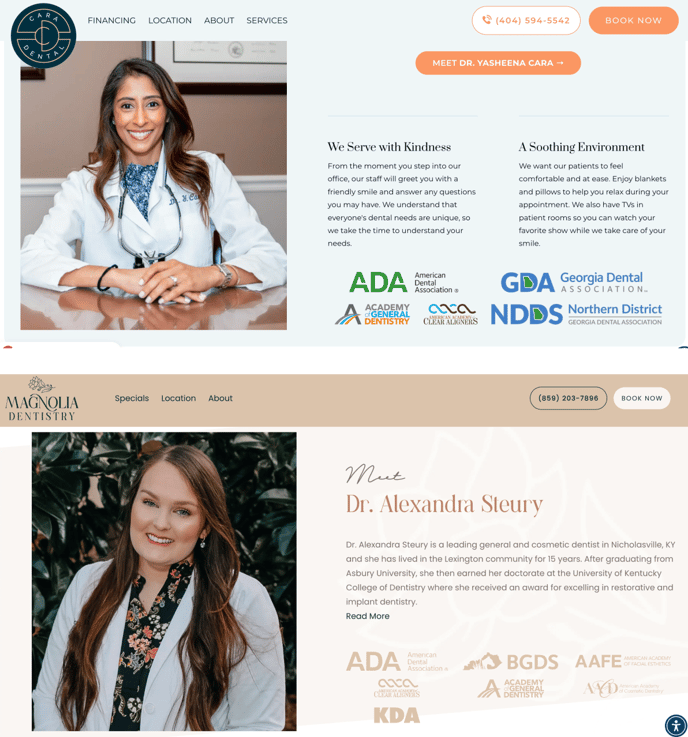
We showcase the practice's licenses, certifications, and affiliations, demonstrating credibility and adherence to industry standards.
SEO Benefit:
Search engines prioritize trustworthy websites in their rankings. Displaying licenses, certifications, and affiliations helps establish credibility and trust with both search engines and potential patients. When users trust a website, they are more likely to spend time on it, reducing bounce rates and signaling to search engines that the site provides valuable content.
Accessibility
We ensure that the website is accessible to all users, including those with disabilities, by implementing features such as alt text for images and the ADA widget.

SEO Benefit:
- Compliance with Web Standards: Search engines like Google prioritize websites that adhere to web standards and best practices. Implementing accessibility features demonstrates that the website meets these standards, which can positively influence the search engine rankings.
- Increased Reach: By catering to users with disabilities, we're broadening the potential audience. This inclusivity can lead to more traffic to the website, which in turn can positively impact your SEO rankings.
- Reduced Bounce Rates: Accessibility features can help reduce bounce rates by ensuring that all users, regardless of their abilities, can engage with the content effectively. Lower bounce rates can signal to search engines that the website provides valuable and relevant content to users, potentially improving your SEO performance.
On-Page SEO
On-page SEO techniques aim to improve factors such as keyword usage, content quality, page load speed, mobile-friendliness, and user experience, ultimately helping the page rank higher in search engine results pages (SERPs) for relevant queries.
Title Tags
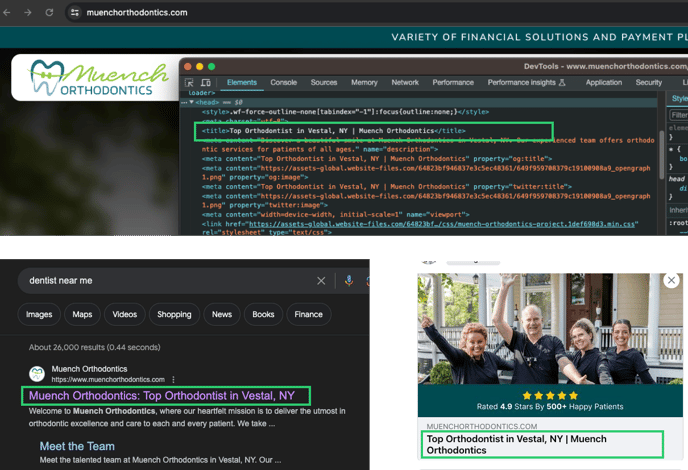
Meta title tags, also known simply as title tags, are HTML elements used to define the title of a webpage. They provide a concise and accurate description of the content of a webpage. Meta title tags are displayed prominently in search engine results pages (SERPs) as the clickable headline for a given result. They also appear as the title of the browser tab when the webpage is opened.
Including relevant keywords and location in title tags helps search engines understand the content of the pages and improves the likelihood of ranking for relevant searches, such as "dentist in [city].
SEO Benefit:
- Search engines often display the title tag as the clickable headline in search engine results pages (SERPs).
- A well-crafted title tag can improve the visibility of a webpage in search results, potentially leading to increased traffic.
Meta Descriptions
Meta description tags are HTML attributes that provide a concise summary of the content of a webpage. They are displayed below the title tag in search engine results pages (SERPs) and are intended to give users a preview of what they can expect if they click on the link.
Compelling meta descriptions encourage users to click on the practice’s website in the search results, increasing click-through rates. This can indirectly impact SEO by signaling to search engines that the page is relevant and engaging for users.
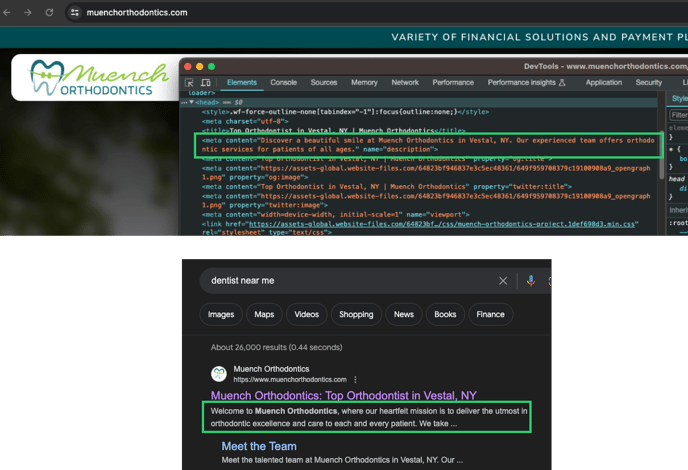
While meta descriptions do not directly impact search engine rankings, they can influence click-through rates (CTRs). A well-crafted meta description that accurately reflects the content of the webpage and includes relevant keywords can entice users to click on the link, thereby increasing organic traffic to the site.
When a webpage is shared on social media platforms, the meta description is often used as the default description for the shared link.
Header Tags
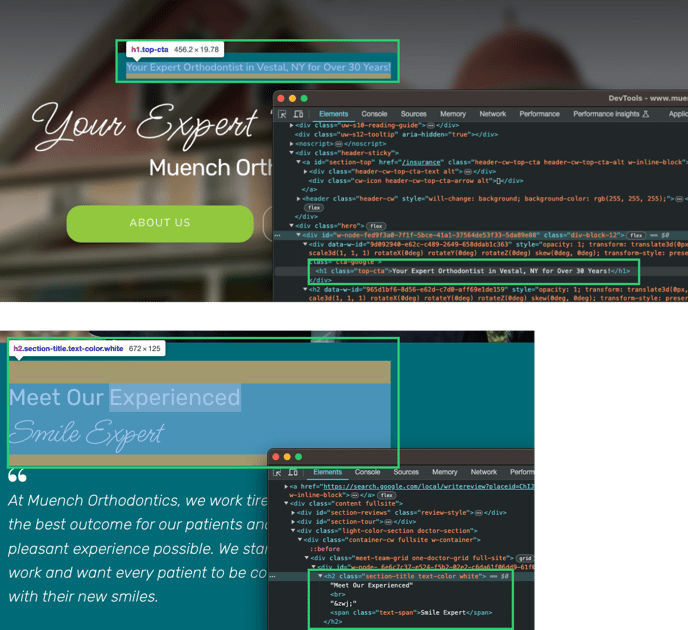
Header tags, also known as H1, H2, H3, etc., are HTML elements used to define headings and subheadings within a webpage. They serve several purposes and are crucial for both search engine optimization (SEO) and user experience.
Properly structured headers (H1, H2, etc.) not only make the content more readable for users but also help search engines understand the hierarchy and relevance of the content. Including keywords in headers can further enhance SEO.
SEO Benefit:
Search engines use header tags to understand the structure and context of the content on a webpage. The H1 tag carries the most weight in terms of SEO and should ideally contain the primary keyword or main topic of the page. Properly using header tags with relevant keywords can improve the visibility of a webpage in search engine results pages (SERPs) for relevant queries.
URL Structure
Concise and keyword-rich URLs make it easier for both search engines and users to understand the topic of the page. This can improve click-through rates and overall SEO performance.
SEO Benefit:
Overall, the URL structure of internal pages plays a crucial role in enhancing user experience, improving SEO, facilitating website maintenance, and ensuring the accessibility and shareability of the content. Therefore, it's essential for website owners and developers to pay close attention to their URL structure and ensure that it is optimized for both users and search engines.
Content Optimization
High-quality, informative content that addresses common dental concerns not only provides value to the practice’s audience but also increases the likelihood of ranking for relevant keywords. Natural incorporation of keywords helps search engines understand the topic of the website’s content.
For more information on how we create content, refer to these articles:
Image Optimization
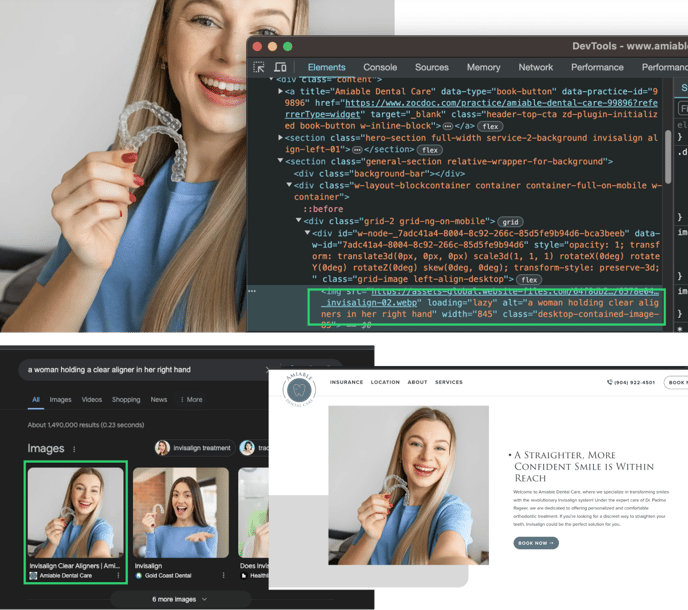
Descriptive file names and alt tags for images improve accessibility for users and provide additional context for search engines. Optimized images can appear in image search results, driving additional traffic to the website.
Additional value:
Search engine algorithms cannot "see" images; they rely on textual cues to understand what an image is about.
Alt tags (or alternative text) are primarily used by screen readers to describe images to visually impaired users.